On This Page
Overview
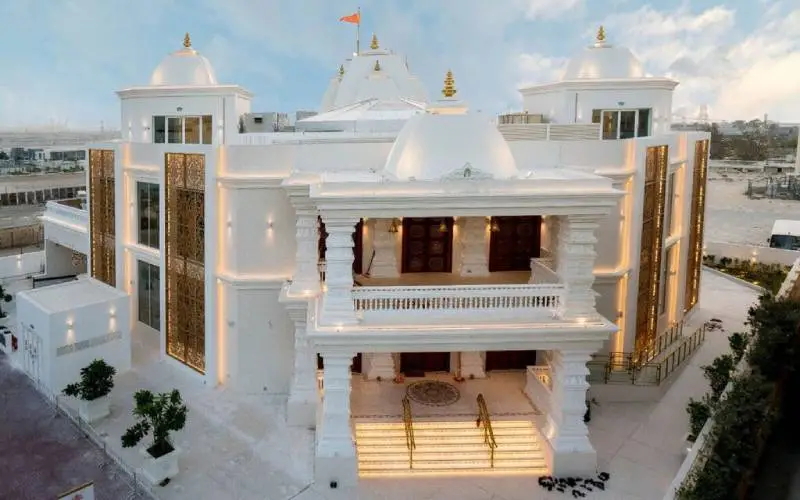
The Jebel Ali Temple (officially part of Dubai’s new Hindu temple complex) is one of the most significant additions to the city’s religious and cultural landscape in recent years. Located in the Jebel Ali Industrial Area, this temple opened its doors in 2022 as the largest Hindu temple in the UAE, built to serve Dubai’s sizeable South Asian community while also welcoming visitors of all backgrounds who want to see its architecture and rituals up close.
Unlike older, smaller Hindu shrines tucked into Bur Dubai’s Al Ras area, Jebel Ali Temple was purpose-built as a modern, spacious complex with dedicated shrines for multiple deities under one roof, making it a genuinely worthwhile stop whether you’re researching it for religious reasons or simply as a cultural landmark to add to your Dubai itinerary.
↑ Back to topJebel Ali Temple Timings 2026
The temple typically closes for a few hours in the afternoon between the morning and evening sessions, similar to many temples elsewhere. Timings can shift slightly around major Hindu festivals such as Diwali or Navratri, when extended hours and special aarti (prayer ceremony) sessions are common — it’s worth checking the temple’s official announcements or community WhatsApp groups the week of a festival before planning your visit.
↑ Back to topEntry Rules & What’s Allowed
Entry to Jebel Ali Temple is free and open to visitors of all faiths, not just practising Hindus. That said, photography and filming are generally restricted around the main deity shrines out of respect for worshippers actively praying, though photos in the outer courtyard and general complex areas are usually fine — security staff on-site will guide you on where cameras are and aren’t permitted.
Dress Code & Etiquette
- Modest clothing required: Shoulders and knees should be covered for both men and women; avoid sleeveless tops, shorts, or short skirts.
- Remove footwear: Shoes and sandals must come off before entering the temple halls.
- Keep noise low: The temple is an active place of worship, so quiet, respectful behaviour is expected throughout.
- Follow queue etiquette: During peak hours or festivals, visitors queue for darshan (viewing of the deity) — be patient and follow staff directions.
- Ask before photographing people: Worshippers are there to pray, not to be photographed, so always ask first if you want to include people in your shots.
Architecture & Deities
Jebel Ali Temple was designed to house multiple deities under a single roof, reflecting the diversity of Hindu traditions represented within Dubai’s community. The complex features intricately carved stone and marble work, with design elements inspired by traditional South Asian temple architecture, adapted for a large-scale, modern facility. Inside, dedicated shrine spaces allow devotees from different regional and sectarian backgrounds — including worshippers of Shiva, Krishna, and other deities — to pray at the same complex, which is part of what makes it unique compared to older, smaller shrines in the city.
↑ Back to topFestivals & Best Time to Visit
The temple is at its liveliest during major Hindu festivals like Diwali, Navratri, and Holi, when the complex is elaborately decorated and hosts special prayer ceremonies, cultural performances, and community gatherings. If you want to experience the temple at its most vibrant, timing your visit around one of these festivals is worthwhile, though expect significantly larger crowds. For a quieter, more contemplative visit, early morning on a weekday is your best bet.
↑ Back to topIs Jebel Ali Temple Worth Visiting?
Yes, especially if you’re interested in Dubai’s multicultural and religious diversity beyond its more famous mosques and churches. As the largest Hindu temple in the UAE, it’s a genuinely significant architectural and cultural landmark, and because entry is free, it’s an easy addition to a half-day itinerary if you’re already exploring the Jebel Ali or Dubai South area. It’s less of a “photo landmark” like Burj Khalifa and more of a place best appreciated by visitors who approach it with genuine curiosity and respect for its purpose as an active place of worship.
↑ Back to topJebel Ali Temple vs Other Dubai Temples
| Temple | Vibe | Typical Entry |
|---|---|---|
| Jebel Ali Temple | Large, modern, multi-deity complex in Jebel Ali Industrial Area | Free |
| Shiva & Krishna Mandir (Bur Dubai) | Older, smaller, historic shrine tucked into Al Ras souq area | Free |
| Guru Nanak Darbar (Jebel Ali) | Large Sikh gurdwara near the same industrial area, known for community meals | Free |
Location & Getting There
Jebel Ali Temple is located in the Jebel Ali Industrial Area, on the outskirts of Dubai, closer to Dubai South and the Jebel Ali Free Zone than the main city centre.
- By car or taxi: Around a 35–45 minute drive from Downtown Dubai, depending on traffic; this is by far the easiest way to reach the temple.
- By metro and taxi combo: Take the Metro Red Line toward UAE Exchange or Ibn Battuta, then continue by taxi, since the temple isn’t within easy walking distance of any metro station.
- Parking: Free parking is generally available on-site or nearby, though it can fill up quickly during festivals.
Other Attractions Nearby
If you’re making a day of it around Jebel Ali, the Guru Nanak Darbar Gurdwara sits close by and is worth pairing with your visit, offering a similarly welcoming, multicultural stop with a free community kitchen (langar). Ibn Battuta Mall is also a short drive away if you want a shopping or dining break afterward. If your trip includes the coast, our Al Mamzar Beach Park guide and Kite Beach guide cover two of Dubai’s best budget-friendly beach days on the opposite side of the city.
↑ Back to topWhat Visitors Say
Visitors frequently describe the temple’s scale and stonework as far more impressive than they expected, especially given how new the complex is.
Members of Dubai’s Hindu community often highlight how meaningful it is to finally have a large, dedicated space after years of smaller shrines.
Non-Hindu visitors often note feeling genuinely welcomed and appreciate the staff’s willingness to explain rituals and customs on request.
Some reviewers mention that the location, being outside the main city centre, makes a car or taxi essential for a smooth visit.
Insider Tips for Your Visit
- Visit on a weekday morning for a quieter, more reflective experience away from festival crowds.
- Dress modestly from the start — there’s no dedicated changing area, so plan your outfit before you arrive.
- Bring socks if you’re not comfortable walking barefoot, since footwear must be removed before entering.
- If you want to witness an aarti (prayer ceremony), ask staff for the day’s timing, as these often happen at specific points in the morning and evening sessions.
- Combine your visit with the nearby Guru Nanak Darbar for a fuller half-day of Dubai’s lesser-known religious landmarks.
Frequently Asked Questions
Is Jebel Ali Temple open to non-Hindu visitors?
Yes, the temple welcomes visitors of all faiths and backgrounds, not just practising Hindus, as long as visitors follow the dress code and general etiquette.
What are the Jebel Ali Temple timings?
The temple is generally open from around 6:00 AM to 12:00 PM in the morning and 4:00 PM to 8:00 PM in the evening, though timings can shift around festivals.
Is there an entry fee for Jebel Ali Temple?
No, entry to Jebel Ali Temple is free for all visitors.
Can I take photos inside the temple?
Photography is generally restricted around the main deity shrines out of respect for worshippers, though photos in the outer courtyard areas are usually permitted. Staff on-site can confirm where photography is allowed.
What should I wear to visit Jebel Ali Temple?
Modest clothing is required — shoulders and knees should be covered for both men and women. Footwear must be removed before entering the temple halls.
How do I get to Jebel Ali Temple?
The temple is located in the Jebel Ali Industrial Area, roughly a 35–45 minute drive from Downtown Dubai. A car or taxi is the most convenient way to reach it, as it isn’t within easy walking distance of a metro station.
Related Dubai Guides

Hi! We’re the Travel Blog Dubai Team — passionate travelers who explore Dubai every day to bring you honest tips, best places to visit, budget ideas, and real experiences.Whether you’re planning your first trip or you live in the UAE, our guides help you discover the best of Dubai, hassle-free.